
Will the sky come alive tonight?
A simple guide to predicting the sunset.
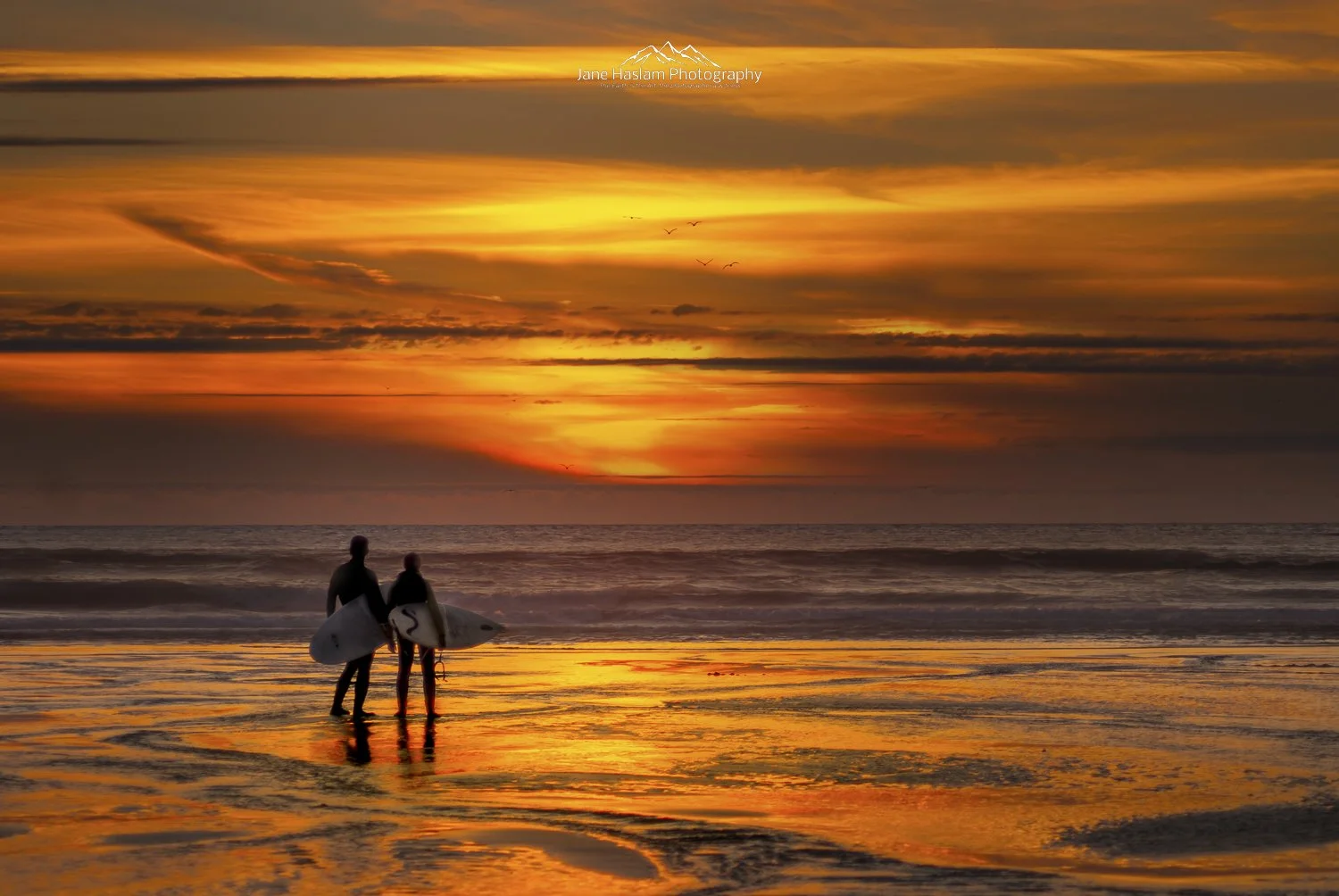
I tend to listen to BBC Radio during the day and was amused last week to hear a lot of hype for some very colorful sunsets that were expected in Britain over the coming days, apparently the atmosphere was laden with particulate from a Saharan dust storm. Here’s what an accompanying BBC news article had to say!!
“Stunning sunsets with risk of 'blood rain' as Saharan dust sweeps UK
A remarkable display is anticipated in the skies over the UK as a vast plume of Saharan dust drifts north over much the country. The dust, made up of fine sand and mineral particles lifted from the deserts of North Africa, will have travelled thousands of miles on warm southerly air currents. As it moves across the UK on Thursday and Friday it is expected to transform ordinary sunrises and sunsets into striking displays of deep gold, amber, and burnt orange.”
I had to laugh, partly because I’m a grumpy old so and so, but mostly because there’s so much more that has to fall into place for the conditions to be right for a striking and vibrant sunset.
Cue a blog post…..
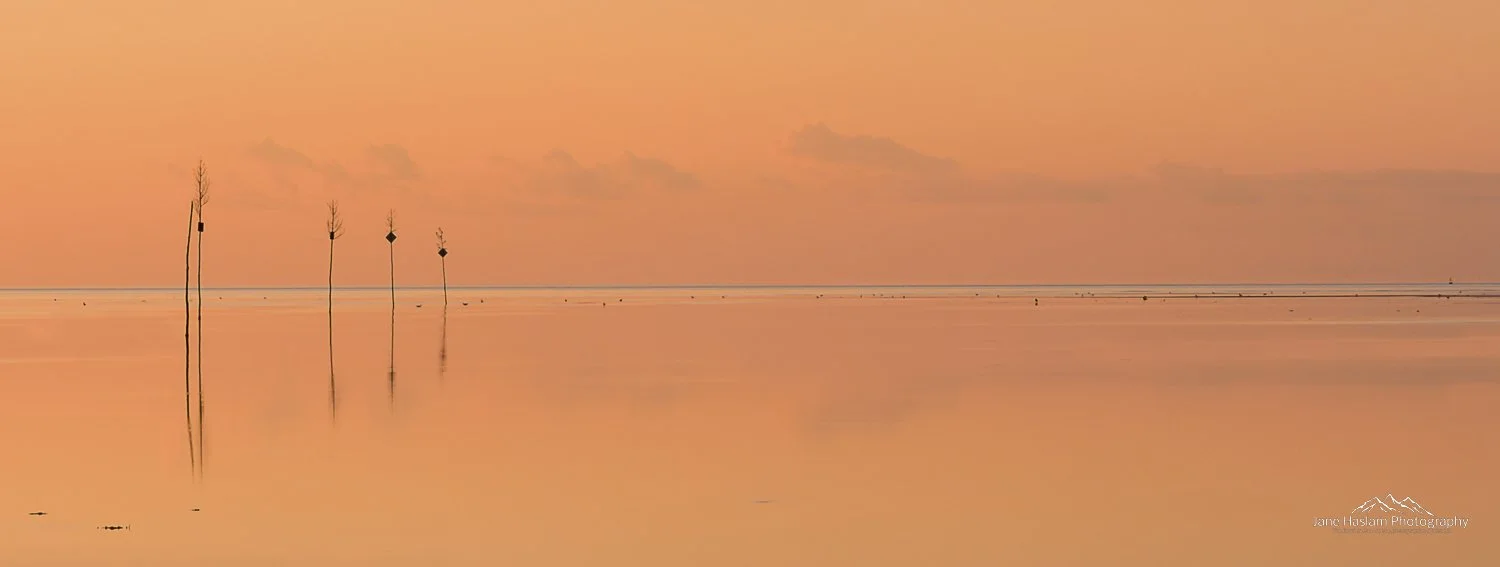
Summer sunset at Rock Harbor in Cape Cod
Clouds:
When it comes to sunset, clouds are the photographer’s best friend, they act as a canvas both catching and reflecting the sun’s warm light as it dips down to and below the horizon.
Ideally you want 30 to 60% cloud cover and absolutely no low, dense cloud banks on the western horizon as these will simply swallow the light before it gets a chance to perform.
High to mid-level clouds work best, with thin wispy cirrus clouds providing the absolute sweet spot for stunning color and drama.
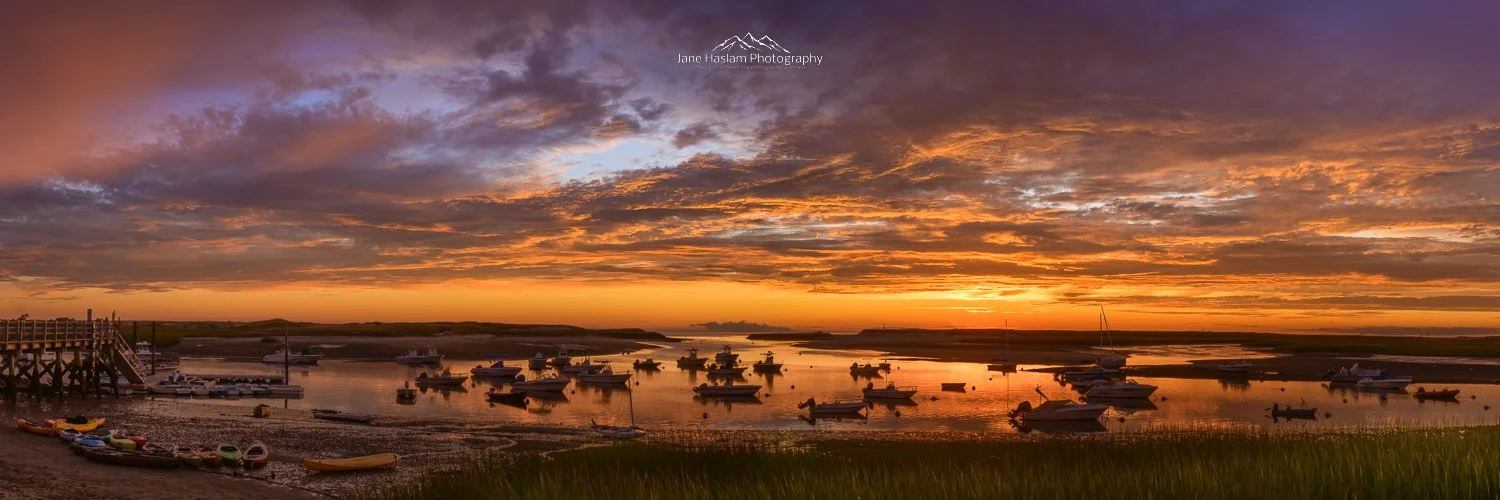
Pamet Harbor, Cape Cod.
After a stormy day the wind dropped and the clouds started to clear out just in time to catch a sunset. This image has quite a bit more than 60% cloud cover but with the horizon being completely clear and a very calm falling tide there were plenty of reflective features to help bounce the beautiful warm light around the scene. I shot a lot of images that evening, but liked the panoramic wide angle view because there was so much character in the stormy sky.
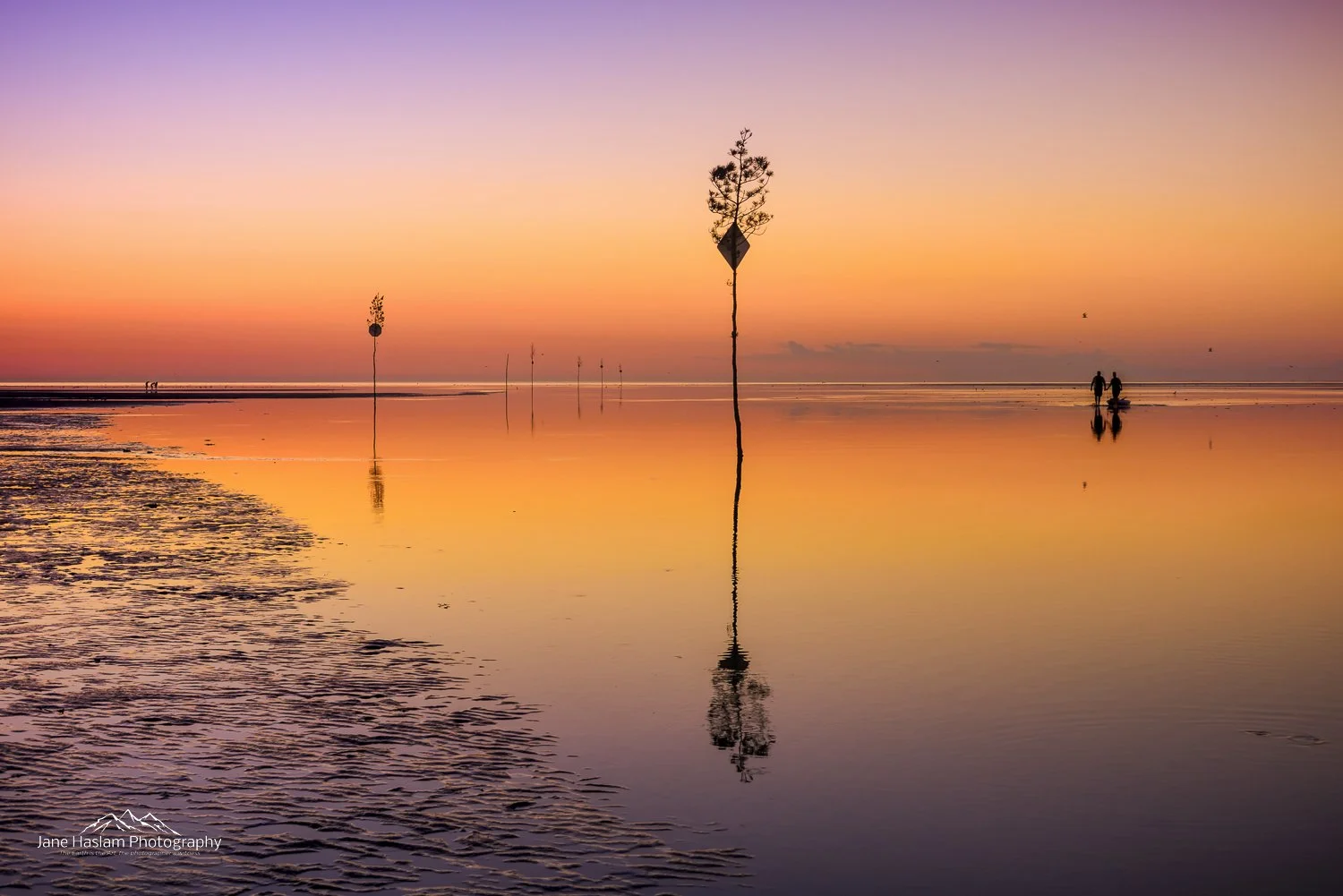
Balance: Rock Harbor, Cape Cod.
This was taken after the most gorgeous blue sky Summers day on Cape Cod, but it’s an example of how cloudless skies don’t always make for the most spectacular sunsets. However what I did have going for me were calm reflective conditions, shallow water from the low tide and some foreground provided by the clam trees that are used to mark the channel. I then got lucky with the couple who were slowly walking back to shore and I just had to wait till they reached a point which gave the overall scene a nicely balanced feel.
Atmosphere:
The atmosphere itself plays a huge role in the quality of a sunset, and this is where things can get really interesting for the photographer. When the sun is at a low angle relative to the viewer, the atmosphere tends to scatter the colder blue light and emphasise the warmer orange tones, setting up the conditions for the drama to come.
Clean, dry air that is low in humidity provides ideal conditions for warm light to bounce around the landscape, delivering pleasing vibrancy and color.
Humidity is also an important factor — too much moisture in the air tends to absorb the light, muting the color and flattening the scene.
Keep an eye out for sunsets that occur soon after a storm, or when the atmosphere contains just a touch of particulate matter. Dust, pollen and even distant wildfire smoke can add a rich, luminous glow to the sky. Some of the most memorable sunsets occur in the days following a distant weather event, when fine particles are still suspended high in the atmosphere.
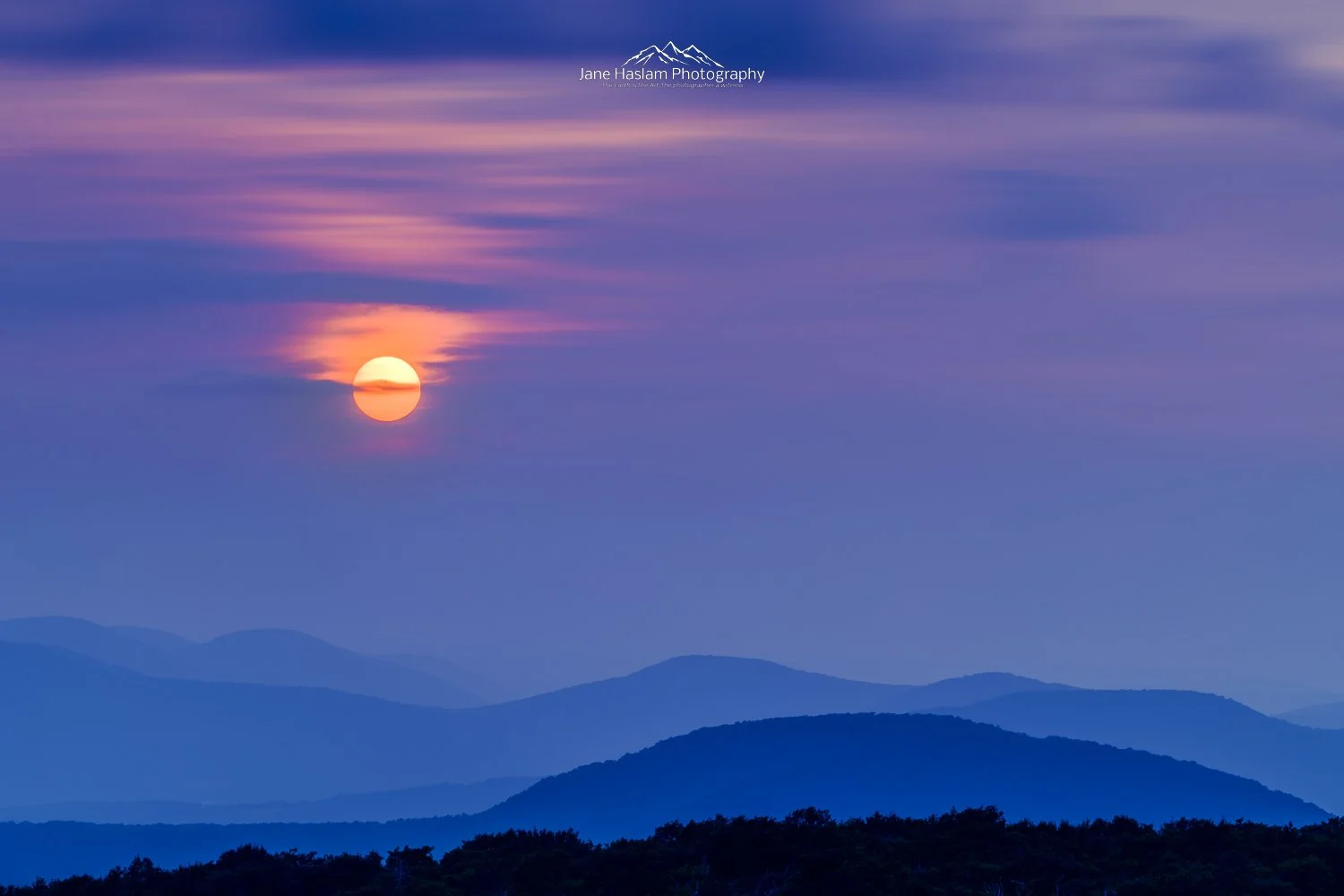
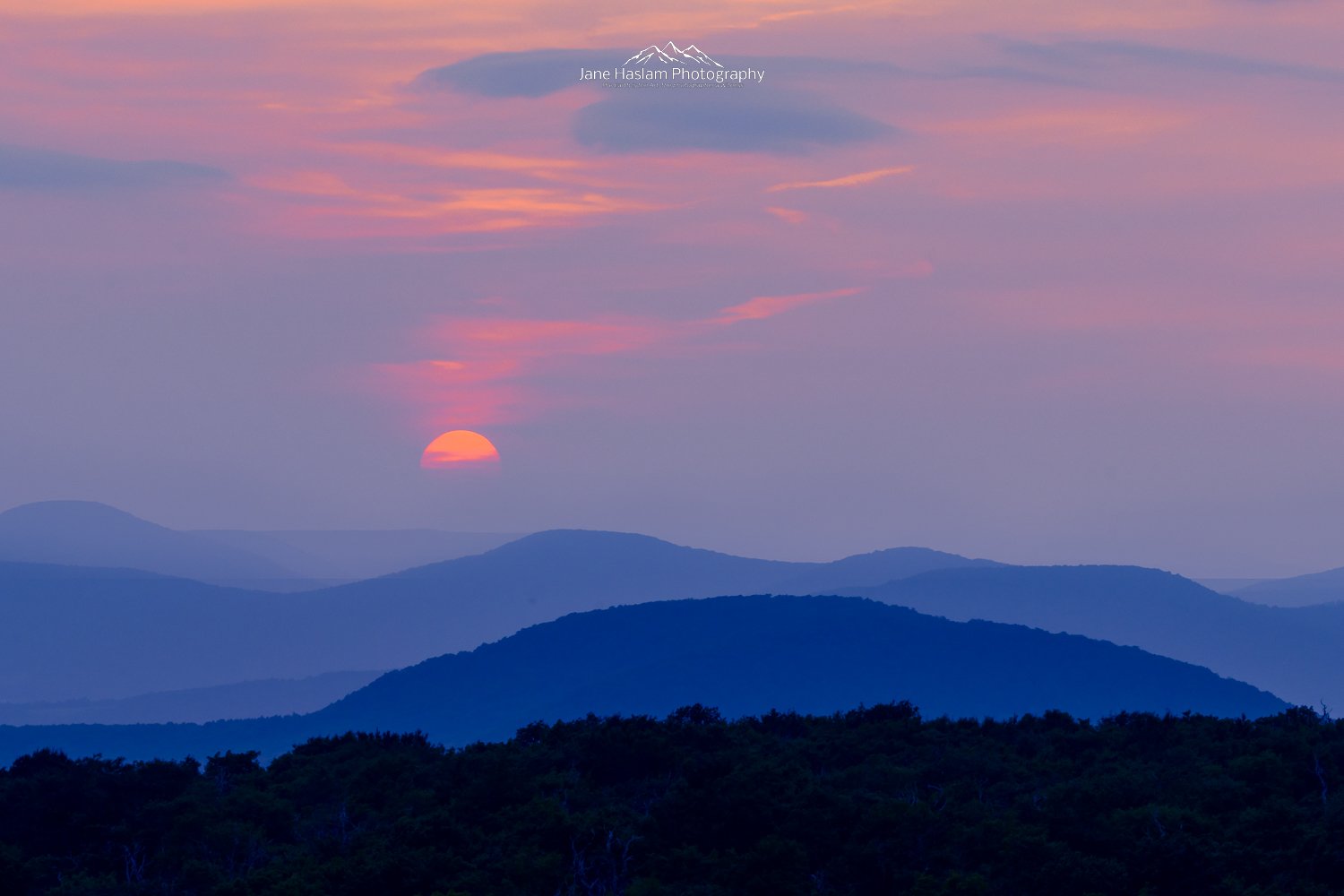
Two images taken 5 minutes apart from the summit of Bearpen Mountain in the Catskills. The atmosphere was pretty humid and to add to the effect there was a dense bank of particulate blowing into the region from Canadian bush fires way to the north.
Wind:
Wind is often overlooked as a sunset predictor, but it plays a surprisingly important role in setting up the conditions for a great image. Check the forecast for wind speed and direction, then think about how that might affect your landscape and final composition.
A breezy afternoon is usually a good sign — think of it as nature scrubbing the air clean, preparing the day to end in style. Wind also sculpts the clouds, moulding them into interesting shapes and pushing them across the sky, adding energy and dynamism to an otherwise static landscape. Watching the clouds shift and reform presents the photographer with constant choice and an ever-changing composition.
Bear in mind that very strong winds can work against you, either stripping the sky bare or driving heavy cloud cover in too quickly, the sweet spot is a moderate breeze.
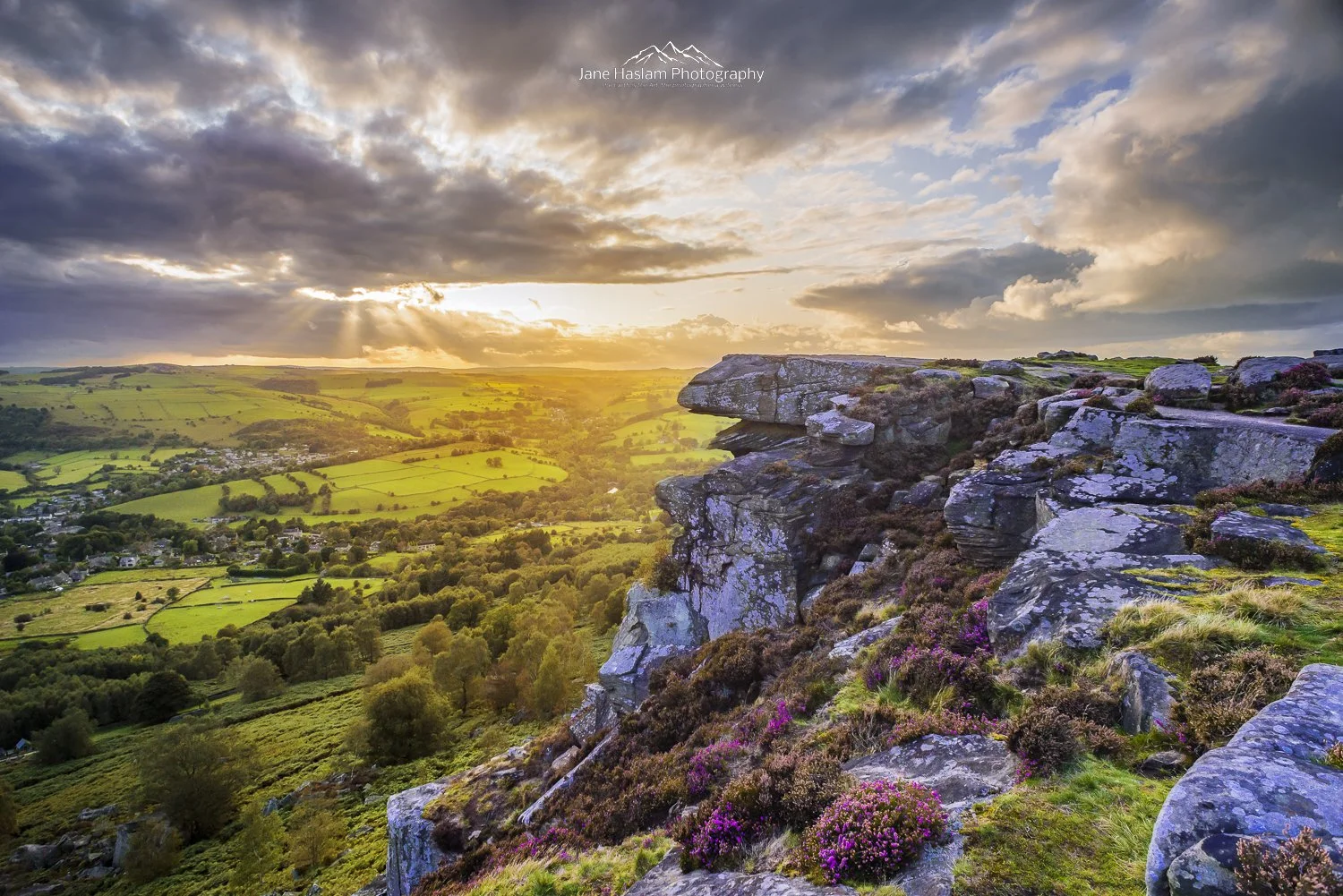
Curber Sunburst:
This is one of my favorite views in Derbyshire, it was one of those English days where you get to experience all 4 seasons in a short space of time. Just half an hour before this photograph was taken I’d been sheltering from a hailstorm. Now that the storm has moved on you can see how the wind has got to work cleaning up the atmosphere..
Timing and Direction
Knowing when to be in position is just as important as knowing where you are going. Getting to a location early gives you time to scout it out and find compositions that could work once the show starts.
Sunset times are easy to look up and there are a number of excellent apps that can help. These will also indicate the timing of golden hour, blue hour and last light which are all essential components when photographing a sunset. Remember a sunset is not simply the short moment when the sun disappears below the horizon. Golden hour can be sublime as a beautiful soft, warm light washes and envelops everything in its path. But don't pack away when it ends, blue hour transforms the landscape into shape and tone, often providing a dramatic and unexpected finale to a beautiful sunset.
Put simply, arrive early, stay late and keep watching the sky for ever changing conditions.
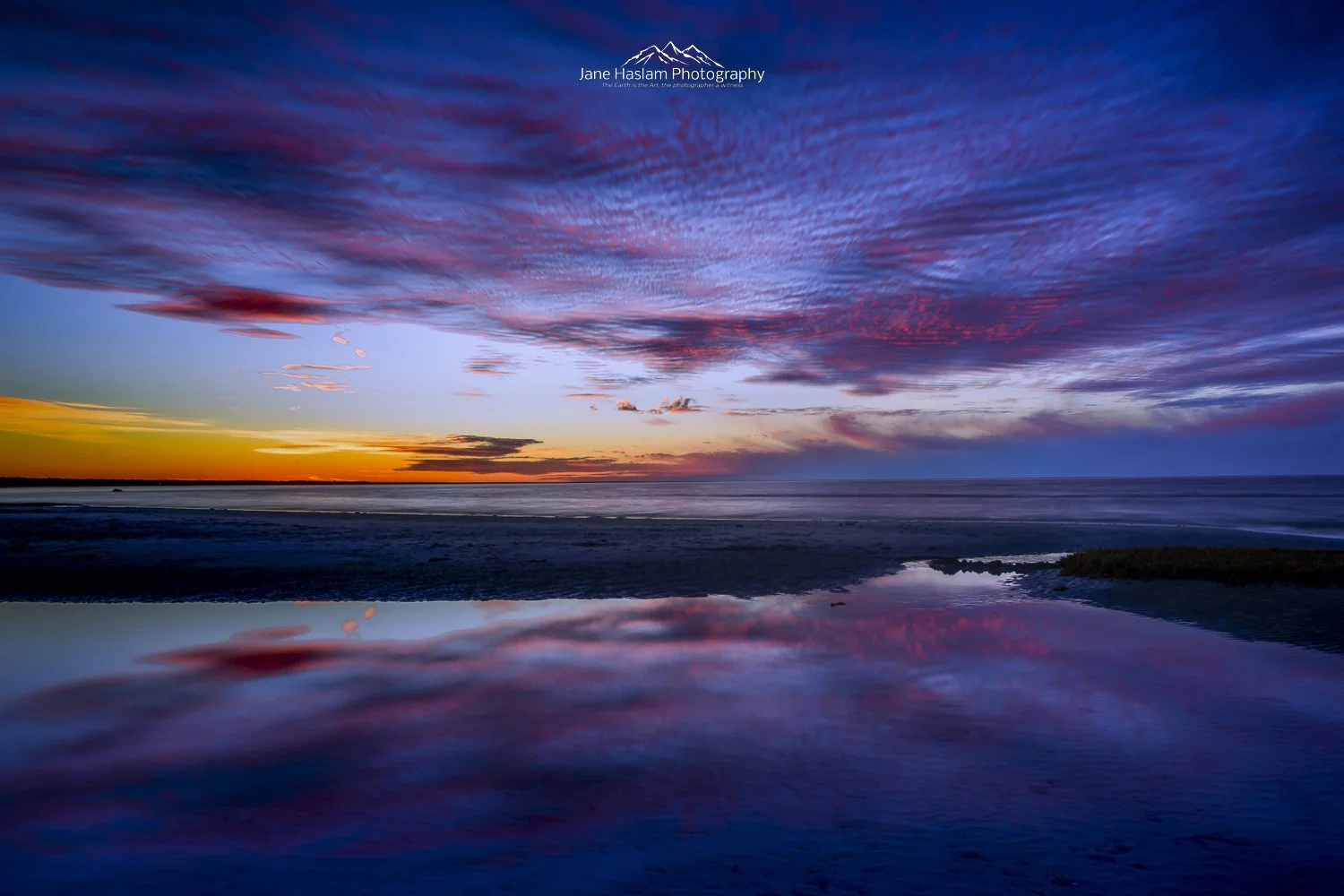
Reflections in a Tide Pool.
Beaches with a calm sea can be fairly featureless spaces but with a perfect amount of cloud a large tide pool I had the perfect foreground as golden hour faded into blue hour at West Dennis on Cape Cod.
Everything discussed so far requires you to interpret the data, but the one thing entirely within your control is where you place yourself. The sun sets in the west and whilst you don't always need a westward view for a great sunset photograph, it certainly helps, especially if you are new to the game.
Ask yourself if you have a clear and unobstructed view across the landscape towards the setting sun and whether there is a compelling subject or foreground to provide context and interest. Water and elevation are also the photographer’s friend, automatically providing depth and impact to a landscape. Water is an especially good feature, reflections effectively double the visual impact of the scene as well as adding depth and symmetry to the composition.
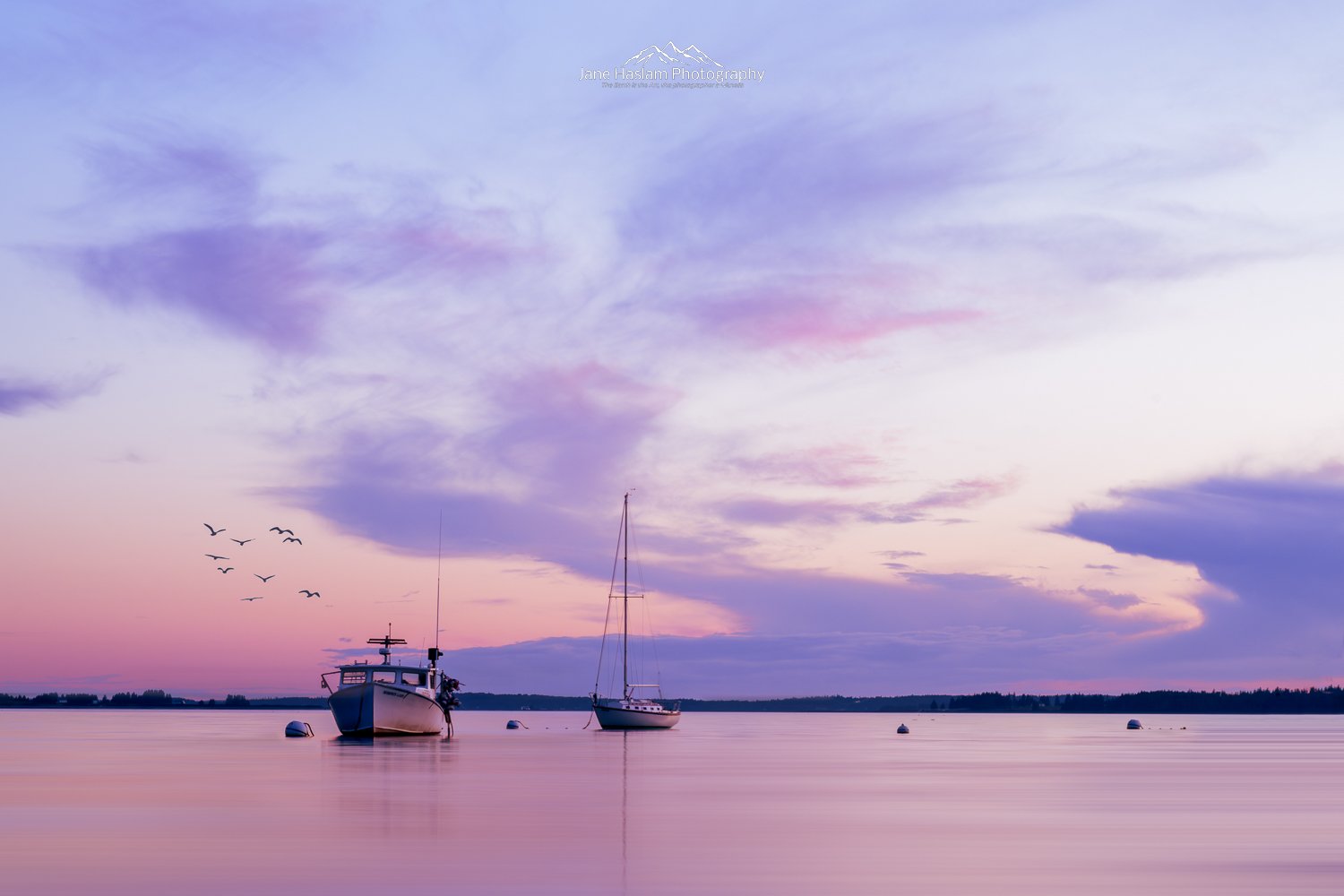
Evening Calm.
This was one of those occasions where, to my mind, all the elements came together almost perfectly. The boats, the birds, the pastels, the beautiful curve in the clouds just belong together despite the sun setting way outside the bounds of the photograph.
Sunsets are a great gift, but the best photographs rarely happen by accident. Clouds, atmosphere, wind, timing and location all play their part - the more you understand how these conditions interact, the better placed you will be to anticipate, then capture something truly special. Knowledge comes with practice, so start checking the forecast with fresh eyes, look at the sky and notice how it behaves in the hours leading up to sunset. Above all, get out there, and be sure to check the entire horizon for potential photo opportunities, remember that weather can change, and if you’re patient, even a dismal sky can come to life, if only for a few moments!
Apps I use:
Weatherbug
Windy
Mountain Forecast
My Sunset
Alpenglow
Planit Pro